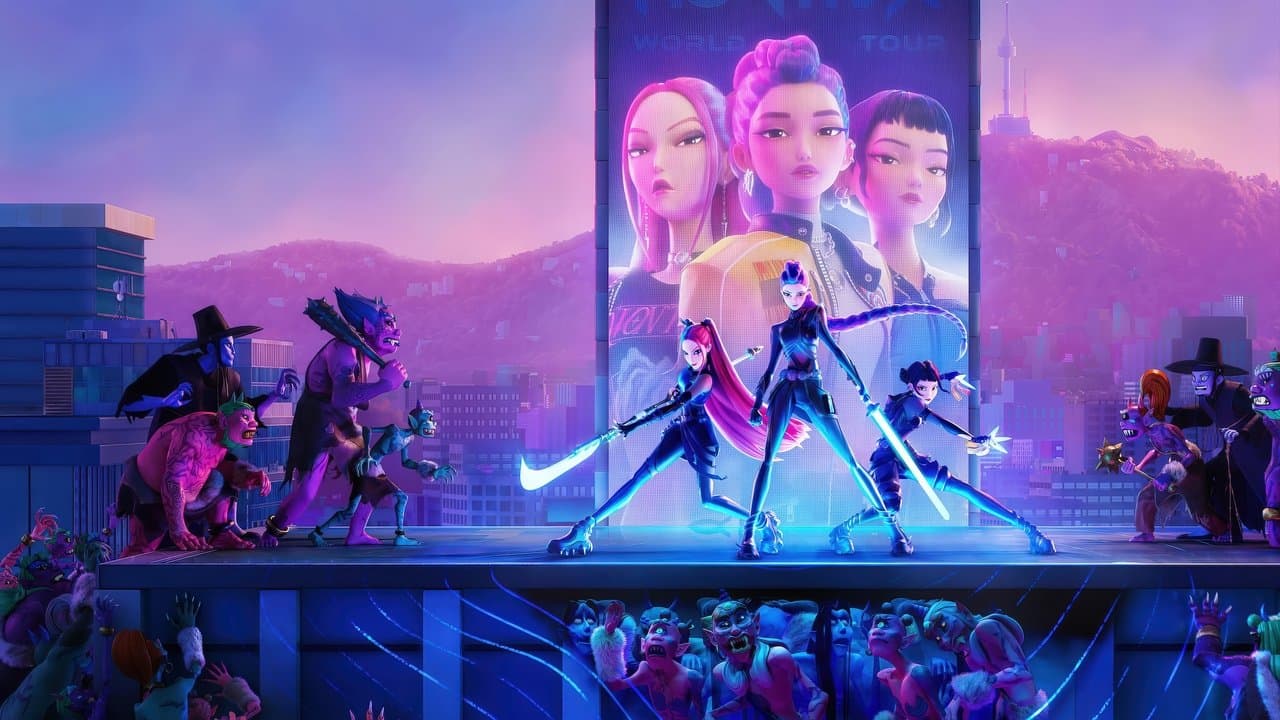
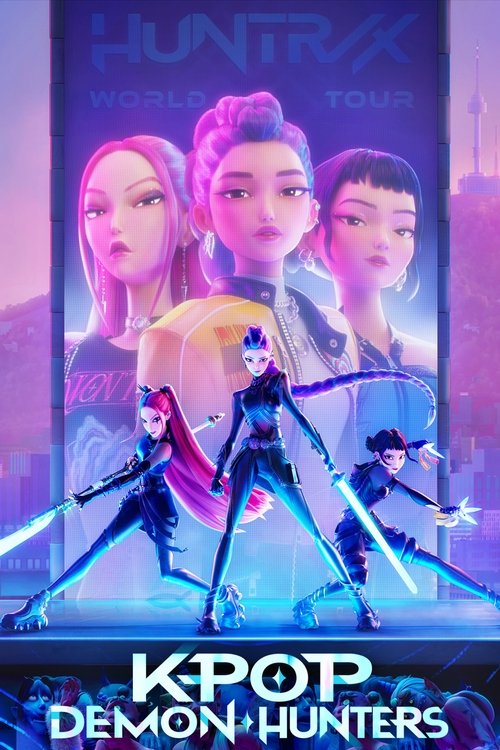
An animated film about a K-pop girl group who secretly fight demons should have been a niche release. Instead KPop Demon Hunters became one of the biggest pop culture moments in years.
Here's what it actually is, and the specific reasons it broke out the way it did.
What It's Actually About
The premise, straight from the synopsis: when K-pop superstars Rumi, Mira and Zoey aren't selling out stadiums, they're using their secret powers to protect their fans from supernatural threats.
Advertisement
That's the whole hook, and it works because it takes both halves seriously. The demon-hunting isn't a joke at K-pop's expense, and the K-pop isn't set dressing for an action film. The idol industry's actual mechanics — the training, the performance obligation, the parasocial relationship with fans — are load-bearing in the plot.
Directed by Maggie Kang and Chris Appelhans, with a voice cast including Arden Cho, May Hong, Ji-young Yoo, Ahn Hyo-seop, Yunjin Kim, Ken Jeong, Lee Byung-hun and Daniel Dae Kim.
The Soundtrack Did the Heavy Lifting
Here's the thing most coverage undersells: the film's songs were written as actual K-pop songs, not as film score.
That distinction matters enormously. A musical number written for a movie exists to serve a scene. A K-pop track is engineered to be replayed, choreographed, clipped and covered. When the songs are built to that standard, they escape the film entirely.
Advertisement
Which is exactly what happened. The tracks charted, got streamed independently of anyone watching the film, and generated the dance covers and lip-sync clips that drive short-form video. People were listening to the soundtrack who had not seen the movie — and then watched it because of the songs.
That's a reversal of the normal order, and it's the single biggest reason this broke containment.
Why the Timing Was Perfect
Three things converged.
K-pop's global infrastructure already existed. The audience, the fan-edit culture, the choreography-learning habit — none of that had to be built. The film dropped into a machine that was already running and let it do the work.
Animation stopped being for children. Adult audiences now treat animated features as a legitimate format rather than a compromise, and the visual language of anime and Korean animation has become mainstream globally.
Netflix's recommendation engine rewards completion. A film this watchable, at this runtime, generates the finish rates the algorithm promotes hardest. Once it started performing, the platform pushed it into far more feeds.
The Fandom Is the Real Story
What separates a hit from a phenomenon is whether the audience makes things.
KPop Demon Hunters generated the full stack: dance covers, fan art, cosplay, edits, and the kind of character-analysis discourse usually reserved for prestige television. Fictional idol groups acquired real fandoms — people picking biases in a band that does not exist.
That's the mechanic worth understanding. The film gave people something to participate in rather than just watch. Passive viewing produces a good weekend. Participation produces months of algorithmic momentum, because every fan edit is free distribution.
What This Signals for Netflix
Netflix has spent years trying to manufacture cultural moments and mostly failing. Enormous budgets have produced films that trended for a weekend and vanished.
This one worked on a fraction of that spend because it understood a specific existing audience rather than aiming at everyone. That's a genuinely different strategy — and one the platform's recent celebrity-fronted output has not managed, as our piece on what happened to With Love, Meghan covers.
Expect more animation, more music-driven projects, and more attempts at exactly this formula. Whether it can be repeated deliberately is another question — phenomena are notoriously hard to manufacture twice.
Should You Watch It?
If you have any tolerance for animation or any curiosity about why your feed was full of this, yes. It's tightly made, genuinely funny, and the music holds up independently of the film.
If you actively dislike both K-pop and animation, this will not convert you. It isn't trying to.
📺 Stream on: Netflix · Directors: Maggie Kang, Chris Appelhans · Genre: Animation · Action · Music
For more of what's worth streaming, see our weekend picks. And for another 2026 pop culture moment built on music, our Olivia Rodrigo third album breakdown covers the most anticipated release in pop.
Have you watched it yet — or just had the songs stuck in your head? Let us know in the comments.
Tags
#KPop Demon Hunters#Netflix#K-pop#Animation#Pop Culture#Arden Cho