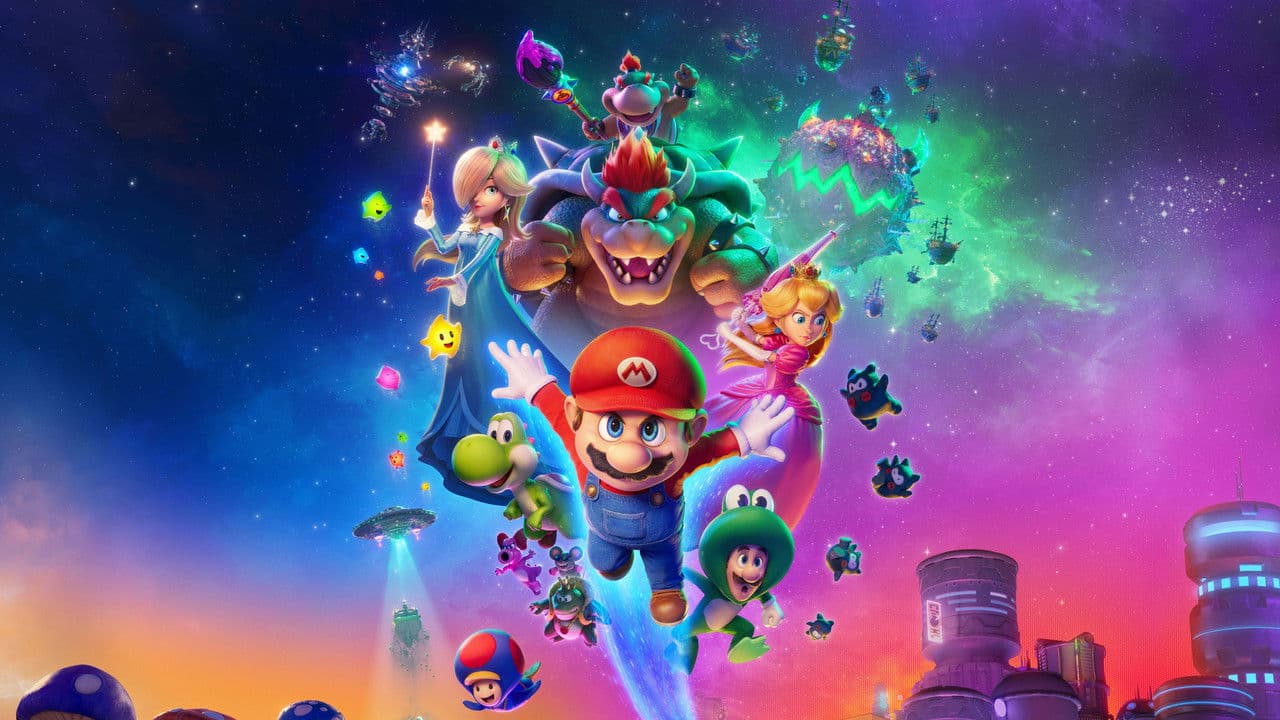
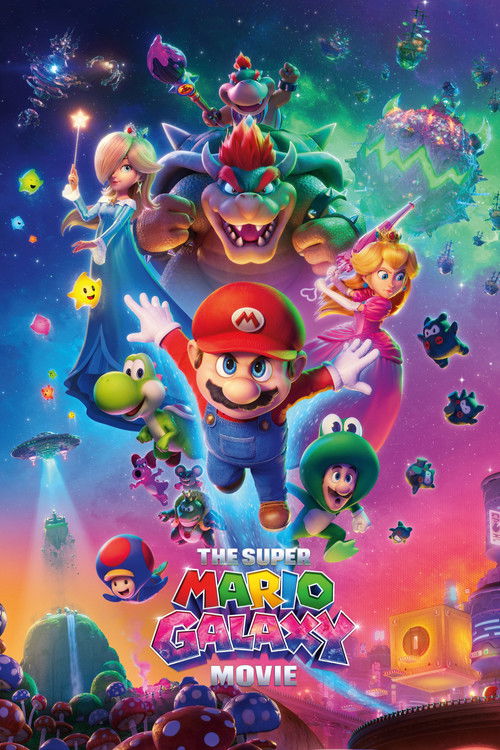
The Super Mario Galaxy Movie opened below its 2023 predecessor. It then became the first film to cross $1 billion at the 2026 box office.
That combination is the interesting part, and it says something about how blockbusters actually make money now.
Detail
Info
Domestic opening
$130 million (4,252 theaters)
First five days
$190 million
Global opening
$372.5 million
Milestone
First $1B film of 2026 — in its 10th weekend
Voice cast
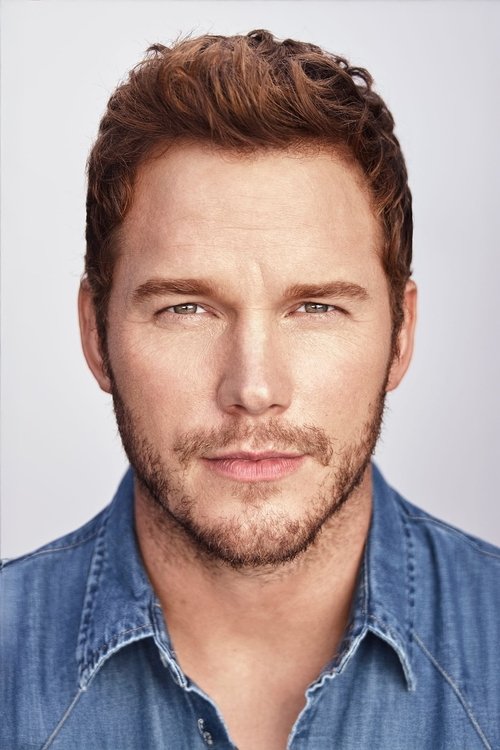
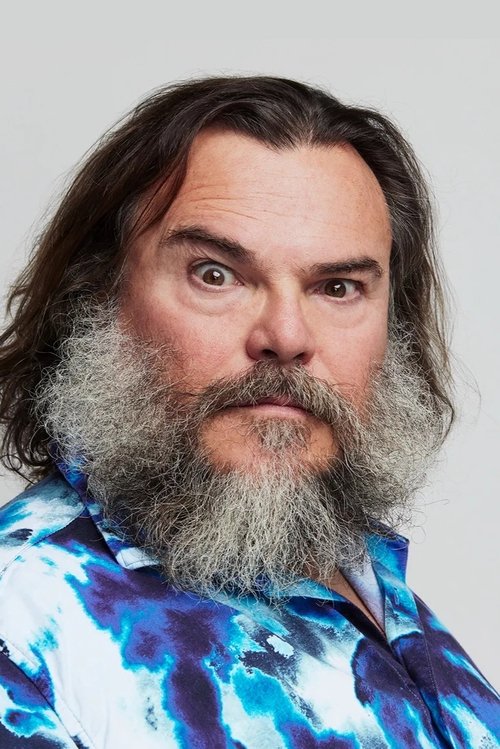
Chris Pratt, Jack Black, Anya Taylor-Joy, Brie Larson, Donald Glover
The Numbers, and the Asterisk
The opening was enormous by any normal measure:
Advertisement
$130 million domestic across 4,252 theaters
$190 million over its first five days
$372.5 million worldwide — the biggest global opening of 2026
Fifth-biggest global opening ever for an animated film
Here is the asterisk most coverage skipped: it underperformed the 2023 film, which opened to $146 million over the weekend and $204 million across five days.
A sequel opening 11% below the original is normally read as franchise fatigue. Coverage at the time framed it as a triumph, which was only half the story.
Why the Smaller Opening Didn't Matter
It reached $1 billion in its tenth weekend. Not its third or fourth — its tenth.
That is the actual story. Modern blockbusters are front-loaded: they take enormous openings and then collapse, because the audience that cared showed up immediately. A film still earning meaningfully ten weekends later has legs, which is a different and healthier thing.
Advertisement
Family films are the last category where this reliably happens. Adults with children do not go on opening weekend. They go when the schedule allows, during holidays, and repeatedly — a child who likes a film wants to see it again.
So a lower opening with a longer tail can out-earn a bigger opening that evaporates. That is what happened here.
The Voice Cast Is Absurd
Returning and new:
Chris Pratt as Mario
Charlie Day as Luigi
Anya Taylor-Joy as Princess Peach
Jack Black as Bowser
Keegan-Michael Key as Toad
Donald Glover, Benny Safdie, Brie Larson
Jack Black remains the reason the first film worked commercially beyond its target audience. "Peaches" became a genuine chart entry, which is not a thing that normally happens to a villain song in a video game adaptation.
Benny Safdie in a Mario film is the strangest credit here — he directs uncompromising anxiety-driven dramas. That casting is a deliberate wink at adults in the audience.
The Story
Having stopped Bowser's plan to marry Princess Peach, Mario and Luigi face Bowser Jr., who wants to free his father and restore the family legacy. The brothers travel across the stars to stop him.
Making the antagonist a child avenging his father is a smarter structure than it needs to be — it gives the sequel an emotional register the first film didn't have, without asking a Mario film to be serious.
What It Means for Game Adaptations
The video game adaptation used to be shorthand for guaranteed failure. That is now comprehensively over.
What changed is straightforward: studios stopped trying to make games respectable. The failures were films embarrassed by their source, adding grit and realism nobody asked for. The successes are unembarrassed — they look like the games, sound like the games, and trust that the thing people already love is the thing to deliver.
The same instinct is why The Last of Us works on television, though from the opposite direction — it cut the gameplay entirely and kept the relationships.
Nintendo's involvement matters too. The company is famously protective of its properties, and that control is a large part of why these films feel coherent rather than licensed.