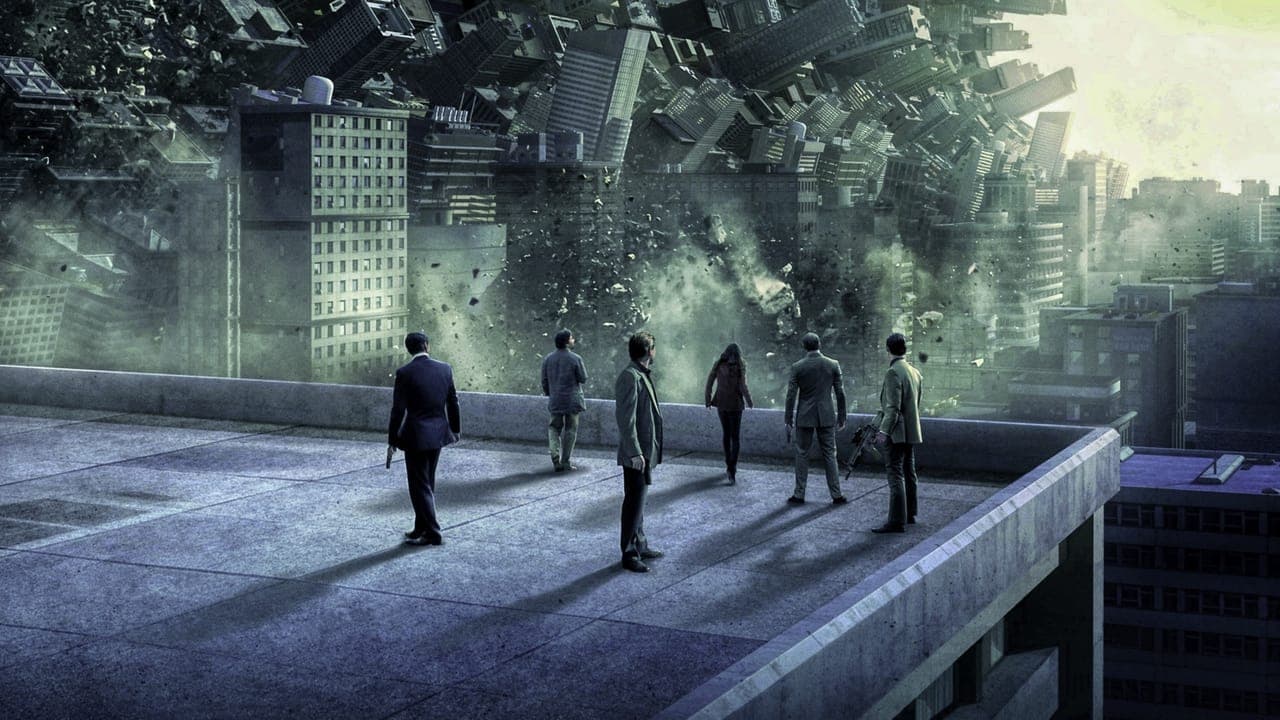
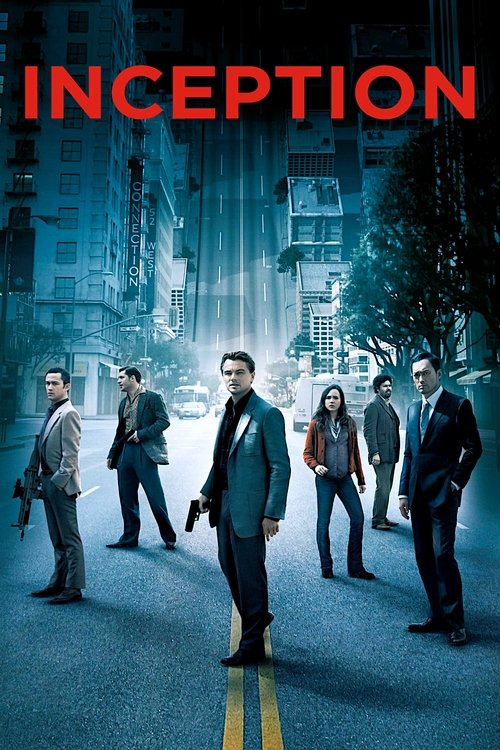
Cobb spins the top, walks away from it to hug his children, and Nolan cuts to black while it's still turning. Fifteen years later people still argue about whether it falls.
Here's the honest answer: the film tells you it doesn't matter — and then quietly tells you the answer anyway.
Advertisement
Detail
Info
Director
Christopher Nolan
Starring
Leonardo DiCaprio, Joseph Gordon-Levitt, Tom Hardy, Cillian Murphy, Elliot Page
IMDb
8.8
Runtime
148 minutes
The question
Is Cobb awake at the end, or still dreaming?
What Actually Happens
The Fischer job succeeds. Cobb gets lost in limbo retrieving Saito, they both wake on the plane, and Saito makes the call that clears Cobb's murder charge.
Cobb lands in Los Angeles, passes immigration, and is met by his father-in-law. He goes home. He sets his totem — the spinning top — going on the table, as he has throughout the film to check whether he is dreaming.
Then his children turn around. For the entire film he has only seen them from behind, faces hidden, because that is how his memory replays them.
This time they turn. He walks toward them. He does not look back at the top.
Advertisement
The camera stays on it. It wobbles — genuinely wobbles, which a top in a dream never does — and the film cuts.
Why the Question Is a Trap
Nolan has addressed this directly, and his answer is more interesting than a yes or no.
The point is not whether the top falls. The point is that Cobb walks away before finding out.
For the whole film he is a man who cannot trust his own reality and compulsively tests it. The totem is his addiction. In the final scene he stops needing it. He chooses his children over the verification.
Whether that room is real is irrelevant to Cobb, because he has decided it is his life either way. The character arc completes at the moment he turns his back on the top — everything after that belongs to the audience, not to him.
Which is why Nolan cuts. Answering it would make the film about a puzzle. Leaving it makes the film about letting go.
The Detail That Gives It Away
That said, there is a genuine clue, and it isn't the top at all.
The wedding ring. Watch Cobb's left hand across the film. In dream sequences he wears his wedding ring — Mal is alive there, so he is still married. In waking scenes, no ring.
It's consistent throughout, and in the final scene he isn't wearing it.
There's a second argument too: the top was never Cobb's totem. It was Mal's. A totem only works if nobody else knows its properties — and Cobb knows this one intimately, which makes it useless as a test for him. His actual tether to reality was always his children.
And a third, from Michael Caine. He has said Nolan told him that any scene he appears in is reality — his character never enters the dream-sharing. He is in the final scene.
So the evidence points fairly clearly toward Cobb being awake. Nolan just refuses to say it out loud, because the ambiguity is doing work the answer wouldn't.
What Limbo Actually Is
Worth clearing up, since it's the most misunderstood mechanic.
Limbo is unconstructed dream space — raw infinite subconscious, shared, with no architect. You fall into it by dying while heavily sedated, too deep for the kick to reach you.
Time there runs at an extreme ratio. Cobb and Mal spent what felt like fifty years building a world together and grew old in it.
That is the film's real tragedy, and it's easy to miss. Mal's death wasn't the inciting incident — it was the consequence. Cobb performed inception on his own wife to convince her their world wasn't real so she would agree to wake up. The idea took root and never stopped growing, so once they were genuinely awake she still believed reality was a dream, and jumped.
Cobb spends the entire film running from the fact that he killed her with an idea. That's what the totem is really testing.
So — Dream or Not?
The ring says awake. Michael Caine says awake. The top's wobble says awake.
But the film is built so that believing either answer works, and choosing one costs you something. Say it's real and you get a clean ending. Say it's a dream and you get a bleaker, arguably more coherent one.
The only reading that fails is treating it as a riddle with a hidden solution. It isn't a riddle. It's a character deciding to stop asking.