Cooper falls into a black hole and ends up in a five-dimensional room behind his daughter's bookshelf. If that lost you, the short version is this: Cooper was the ghost the whole time, and the beings who built the tesseract are humans from the far future.
Detail
Info
Director
Christopher Nolan
Starring
Matthew McConaughey, Anne Hathaway, Jessica Chastain, Michael Caine
IMDb
8.7
Runtime
169 minutes
The question
Who built the tesseract, and how does Cooper send the data?
What Happens in the Final Act
To give Brand enough thrust to reach Edmunds' planet, Cooper detaches and falls into Gargantua, the black hole. He ejects from his ship expecting to die.
Advertisement
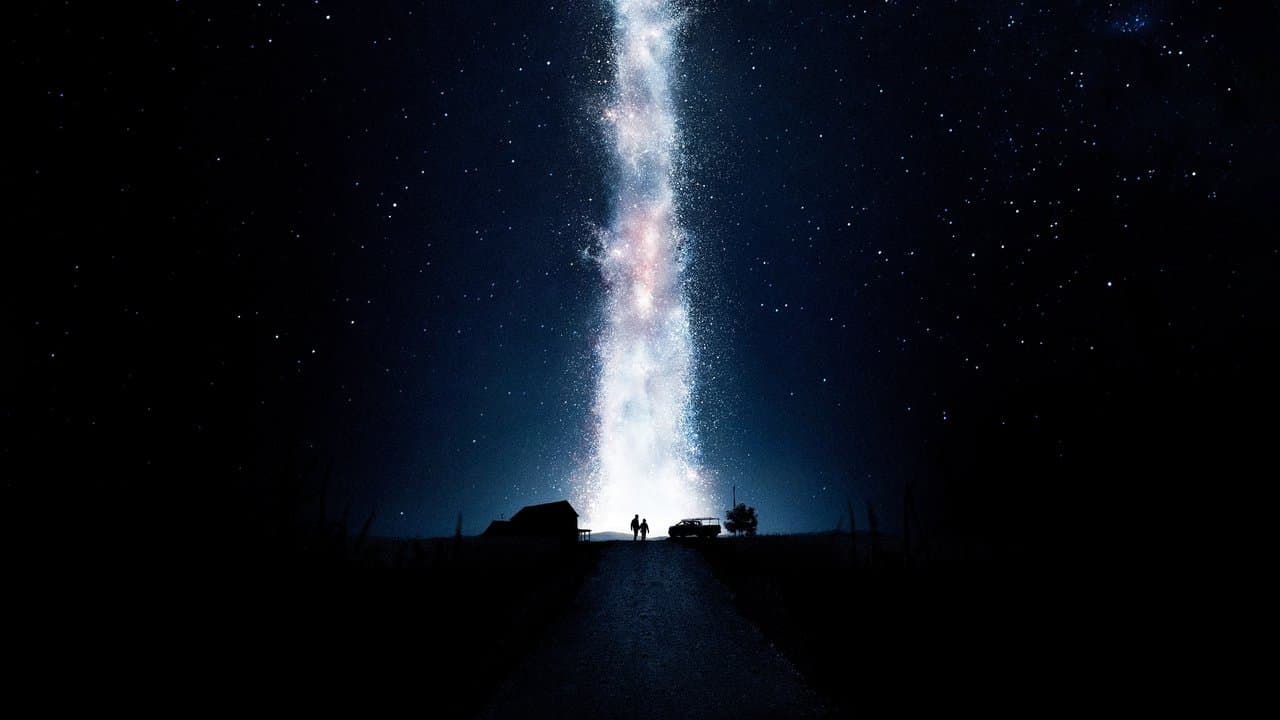
Instead he lands inside a tesseract — a structure that renders time as a physical dimension he can move through. What he sees is the inside of Murph's bedroom, stretched across every moment it ever existed, viewed from behind the bookshelf.
He realizes he can push on gravity. Gravity is the one force that crosses dimensions, which the film establishes early.
So he does two things. He knocks the books off the shelf and pushes dust into a pattern spelling STAY — trying to stop his younger self from leaving. Then, understanding that failed and had to fail, he uses the second hand of the wristwatch he gave Murph to tap out the quantum data from inside the black hole in Morse code.
Adult Murph returns to her childhood bedroom, notices the watch's second hand moving oddly, and reads it. She solves the gravity equation. Humanity is saved.
Advertisement
Who Are "They"?
Throughout the film, characters refer to "they" — whoever placed the wormhole near Saturn and built the tesseract. The assumption is aliens.
Cooper works it out in the tesseract: they are us. Far-future humans who evolved to perceive and manipulate five dimensions, reaching back to save their own ancestors.
This is a closed causal loop, and it's the part that trips people up. Future humans exist because Cooper sent the data. Cooper could only send the data because future humans built the tesseract.
The film doesn't resolve that paradox because it can't. It's a bootstrap loop — the loop simply is, with no origin point. That's a deliberate choice, not an oversight.
The Detail Most People Miss
The tesseract was built for Cooper specifically. Not for any astronaut — for him.
Future humans can move through time but cannot target a specific moment in the past on their own. They needed someone who knew exactly which moment mattered and which person to reach. Only Cooper knew Murph's bedroom, Murph's watch, and that she would be the one to solve it.
That's why the film insists love is quantifiable — Brand's much-mocked speech. It isn't sentiment. Love is the targeting system. It's the only thing that told Cooper where in all of spacetime to aim.
You can find that idea corny. But it's structurally load-bearing rather than decorative.
The other missed detail: Cooper never actually saves the world. Murph does. Cooper is the transmitter. The film's emotional argument is that a father's role was to make his daughter capable, then get out of the way.
What the Very Last Scene Means
Cooper is ejected from the tesseract and found floating near Saturn, picked up by a habitat station orbiting Saturn — Cooper Station, named for Murph, not him.
He meets Murph one final time. She is elderly and dying, surrounded by her own descendants. He is still in his forties, because of relativistic time dilation.
She tells him not to stay. No parent should watch their child die, and her family is there — his isn't. She tells him to go find Brand.
The final shot is Brand on Edmunds' planet, helmet off, breathing unaided, setting up the colony pods alone. She doesn't know Cooper is coming, and she doesn't know Earth was saved.
It's a quietly bleak image, and the film ends on it deliberately — humanity survives, but the people who made it happen mostly don't get to enjoy it.
Does the Science Hold Up?
Partly, and it's worth being honest about which parts.
Solid: the black hole visuals were developed with physicist Kip Thorne and produced genuine scientific insight. Time dilation on Miller's planet is real physics. Gravity crossing dimensions is a legitimate hypothesis in string theory.
Invented: the tesseract, surviving a black hole's interior, and future humans engineering five-dimensional structures. Nothing supports any of that.
The film is rigorous where rigor is possible and openly speculative after that. Complaining that the tesseract isn't real physics misses that the film never claims it is.